
Who benefits the most?
Leaders, strategists, and change agents who need a rigorous basis for innovation management in complex environments.
It is also essential reading for scholars, students, and reflective practitioners seeking to bridge the gap between theoretical complexity and practical application in living systems.
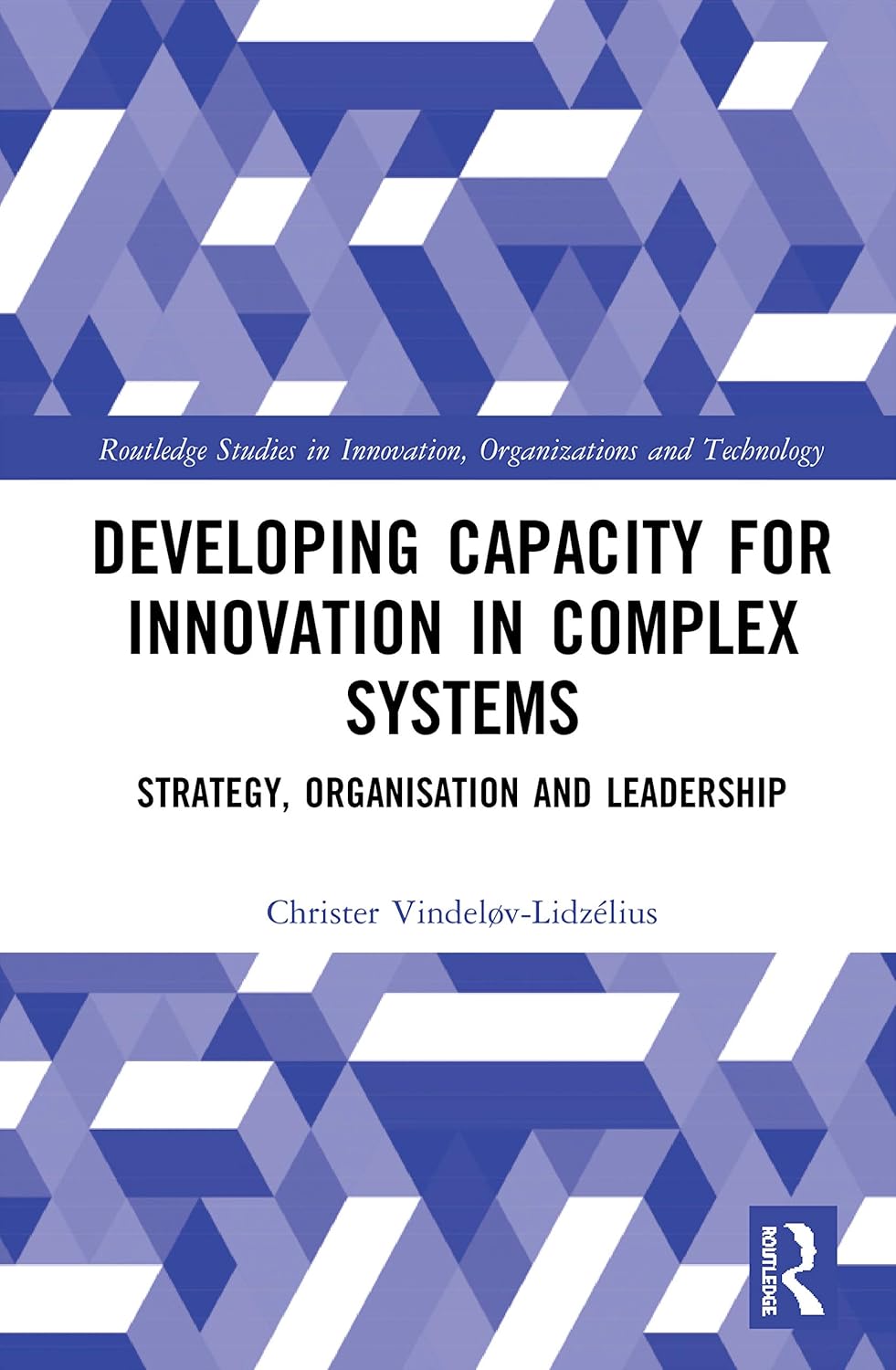
Developing Capacity for Innovation in Complex Systems
Strategy, Organisation and Leadership
Why this book matters
This book addresses the fundamental challenge of our time: how to build a sustainable capacity for innovation in a world of increasing complexity. It moves beyond the simplistic view of innovation as merely "creativity" or "new products" to a holistic understanding of innovation as a complex adaptive system.
Based on rigorous theoretical analysis and mixed-method research, it offers a comprehensive framework for leaders who need to foster innovation not as a one-off event, but as a repeatable, enduring organisational capability. It argues that while success cannot be guaranteed, capacity can be deliberately developed through the alignment of strategy, organisation, and leadership.
Key ideas we build on
Innovation as a Complex Adaptive System
Organisations are not machines. Innovation emerges from the interactions between people, artifacts, and the environment. It requires navigating the 'chaordic' space between chaos and order.
The Holistic Approach
Capacity building requires integrating multiple dimensions: Strategy (direction), Organisation (culture/structure), and Leadership (facilitation/empowerment). Isolated initiatives fail; systemic integration succeeds.
Beyond Linear Processes
Innovation does not follow a straight line. It involves feedback loops, messy front-ends, and non-linear diffusion. Managing this requires 'systems thinking' rather than just process management.
Capacity Can Be Developed
While we cannot control complex systems, we can influence them. We can design the 'container' (culture and governance) that makes innovation more likely to emerge and succeed.
The Leadership Responsibility
Leaders must shift from command-and-control to creating the conditions for innovation: fostering psychological safety, enabling continuous feedback, and balancing exploration with exploitation.